
Monday 29th of July 2024
My week in the adult Intensive Care Unit (ICU) was a highlight of my clinical placements. The 10-bedded unit, freshly renovated, was a bright and well-organized space that provided safety and efficiency in patient care.
The ICU Environment
The ICU was designed with infection control and visibility in mind. Each patient had their own compartment, enclosed by glass screens with curtains inside, allowing for privacy during personal care while maintaining clear visibility for monitoring and quick response to any needs. The standard nurse-to-patient ratio was 1:1, though in cases of stable, long-term patients, this ratio could be adjusted to 2:1. I had the opportunity to work with these stable patients for a day, which offered a different perspective on ICU care.
Daily Routines and Protocols
Mornings began with a handover from the night team, followed by introductions to the patients, thorough head-to-toe examinations, and personal care. We documented our observations in the critical care nursing notes and assisted with various tasks including eating, repositioning, washing, and personal care. A significant part of our work involved tracheostomy suctioning and enteral feeding.
Every time we entered a patient’s compartment, we donned a fabric PPE apron. After use, the apron was discarded in a bin within the patient’s room, collected for laundering, and then returned to the department store room for reuse.
Interdisciplinary Care and Challenges
I observed a physiotherapist working with immobile patients, focusing on movements and muscle stimulation to aid recovery. One of our patients, who had been in the ICU for over a month, was gradually improving after a severe case of tetanus. However, there were also moments of sorrow; on a couple of mornings, I found that patients I had been working with had sadly passed away overnight.
Learning and Improvement
An interesting aspect of my ICU experience was attending an audit and review meeting. Although the meeting was conducted in Nepali, limiting my understanding to the statistical data, graphs, and tables, it was enlightening to see how the performance of the TUTH ICU compared with other ICUs across the country. The review highlighted strengths, areas for improvement and the department’s focus on addressing these issues week by week.
Hands-On Experience and Team Support
Working side-by-side with an assigned nurse provided me with substantial hands-on experience. Whether working with a 1:1 or 2:1 patient ratio, I was able to get to know patients well and contribute more directly to their care.
Conclusion
Leaving the ICU after just one week was a bittersweet experience. The ICU became my favorite department at TUTH, offering deep insights into intensive and critical care nursing. The support and kindness of the team made my time there particularly rewarding, and I felt truly included throughout my placement.
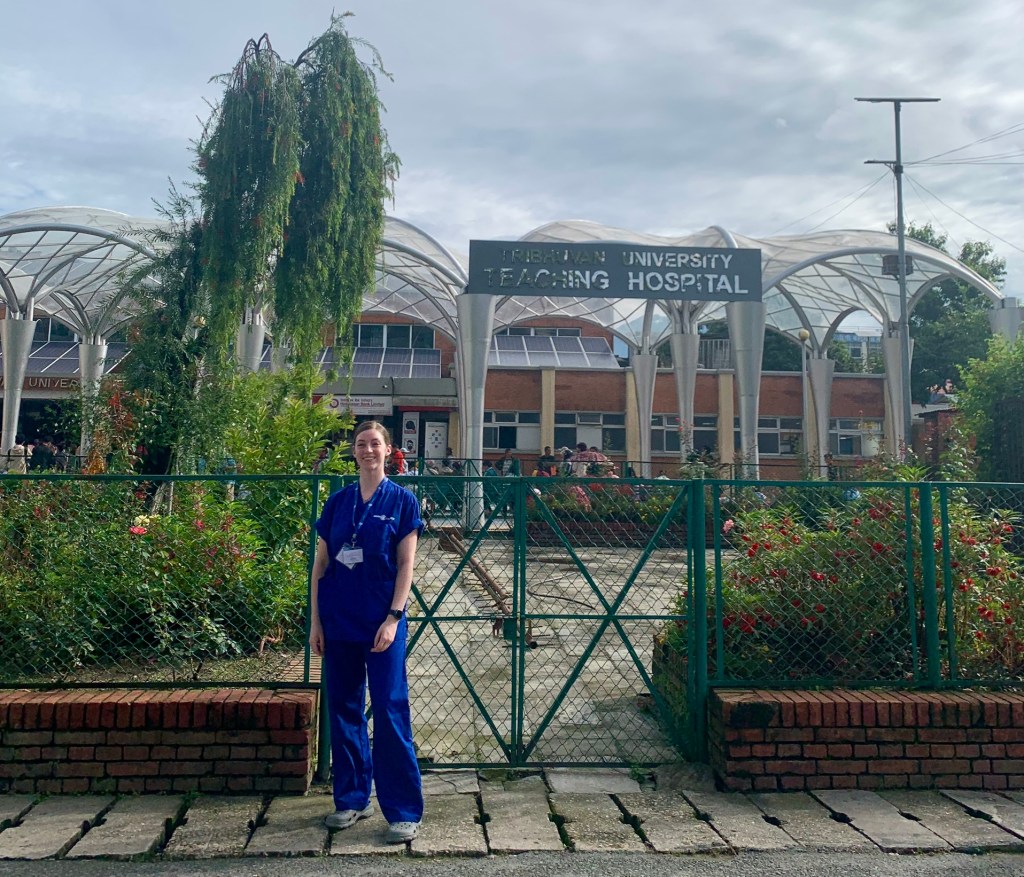
With all five weeks of placements at the TUTH completed, it was time for me to collect my certificate and clear out my locker at the admin building, saying goodbye to the staff who support the international students on campus, and were always there as a friendly face if we needed anything.
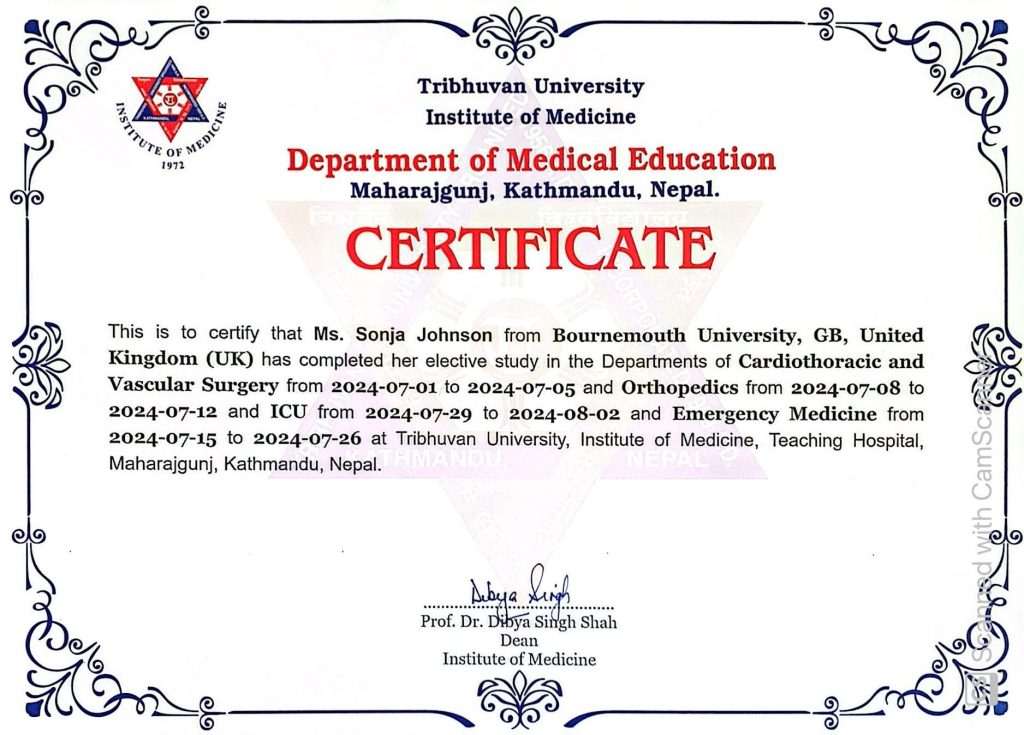
Next, I would head three hours away from Kathmandu to a village in the Nuwakot district for my village healthcare experience.




 Vaegin, Trust, an a peerie skaar o' Wanderlust
Leave a comment