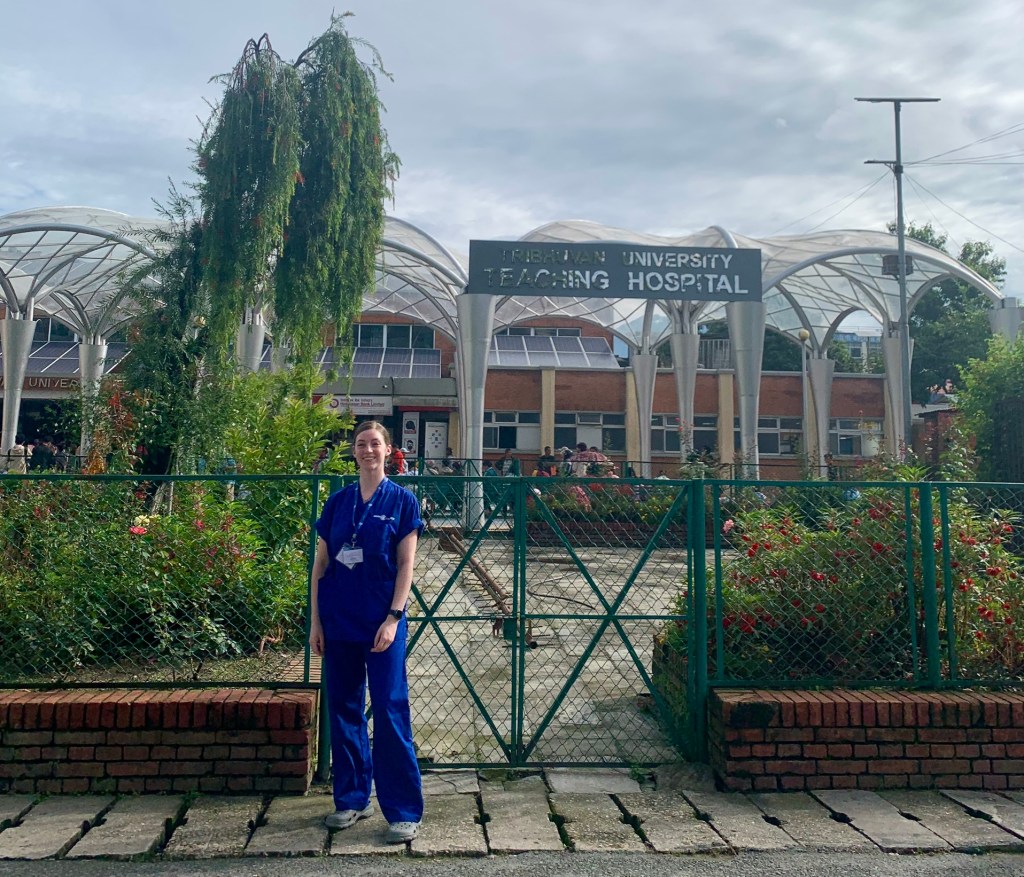
Monday 15th of July 2024
After wrapping up my time in orthopaedics, I took a long weekend trip and returned to start a new placement in the Emergency Department (ED).
Diving into the Emergency Department
The ED was divided into sections based on acuity, determined by the triage nurse upon admission. The green zone catered to minor injuries, fever, convulsive disorders, and abdominal pain. The yellow zone focused on respiratory disorders and infections, many patients presenting with COPD exacerbations.
The red zone, or resusitation zone, was where I spent most of my time and encountered the most fascinating cases. While this zone provided ample learning opportunities, I was less directly involved in patient care here. My role mainly involved observing ward rounds, performing patient examinations and recording vital signs.
In contrast, the green zone offered more hands-on experience. Here, I helped with establishing IV access, taking blood samples, performing ECGs, and other initial tasks.
Learning at Triage and the Green Zone
I spent a little time in triage, where a nurse took vital signs, collected a brief history of the patients’ primary complaint, and directed them to the appropriate ED zone. For admission into the ED, patients were required to pay 200 Nepalese rupees. As the triage nurse was stationed at the main entrance, she also served as an information point.
In the green zone, I adapted to different ECG machines using suction cups instead of disposable stickers. While these were less wasteful, they posed challenges for infection control.
The Dynamics of the Yellow Zone
Although I spent less time in the yellow zone, it was the largest area of the ED and was frequently crowded with family members around the beds. Beds were often shared, and families rested beside their loved ones. Despite efforts to limit family numbers, the space became congested, making it difficult to move around and attend to patients. The lack of privacy, with no curtains between beds, meant that family and other patients were often very interested in everything happening around them.
One day, I shadowed a peer, now a fourth-year medical student, in the yellow zone. I watched as he performed arterial blood gas (ABG) tests, analyzed chest X-rays and CT scans, and discussed cases with the on-duty doctor.
Experiencing the Red Zone
The red zone was where I encountered a range of major traumas. One memorable case involved a child who had fallen and been impaled by a wire through the right lung. Another case involved a 17-year-old with chronic kidney disease who had become ill post-haemodialysis. Due to financial constraints, he received 10,000 rupees worth of treatment as a government grant but was awaiting transfer to a government hospital for continued care.
One particularly unusual case involved a gentleman with mad honey grayanotoxin poisoning. The honey is sometimes used in traditional medicine and as a recreational drug. The toxin affects the central nervous system and can result in hypotension, bradycardia, lightheadedness and respiratory distress. This patient’s bradycardia was treated with atropine, and he remained in the red zone for monitoring and stabilisation.
One shift that stands out involved three young men who had been in a motorbike crash under the influence of alcohol. One had severe head trauma and required emergency neurosurgery, while another suffered multiple fractures and was later intubated in the ICU, awaiting several orthopaedic surgeries. The third patient, who seemed stable at first glance but required oxygen support, tragically passed away when his family decided to discontinue treatment due to financial constraints.
The open layout of the red zone allowed me to become familiar with many patients and access their notes, which was instrumental in learning more about their conditions. Dr. Ramesh’s ward rounds were always informative, and I actively participated in reviewing scans, performing patient exams, and discussing treatment plans with medical students.
Reflections on Mental Health and Critical Care
Dr. Ramesh provided valuable insights into mental health issues prevalent in Nepal, including alcohol dependence disorders, PTSD, depression, stress, and suicide. These insights were critical in understanding the broader context of emergency care in the region. While in the emergency department, I came across numerous cases of intentional poisoning with insecticides, pesticides and alcohol intoxication. Unfortunately, poor mental health is highly prevalent in rural village communities where support is limited. We learned from Dr. Ramesh about projects to improve mental health support and availability throughout Nepal, for example weekly group therapy in rural communities.
Final Thoughts
My time in the ED reinforced my passion for critical care and emergency nursing. The variety of cases and the constant problem-solving required in this field deeply resonated with me. The camaraderie among the nurses made me feel welcomed and part of the team, solidifying my love for this area of nursing.


 Vaegin, Trust, an a peerie skaar o' Wanderlust
Leave a comment